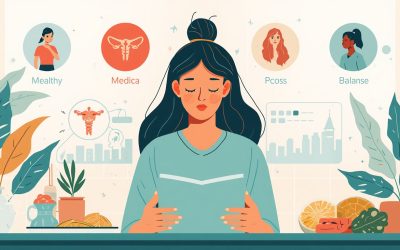

A woman sits in a clinic room after finally getting answers for symptoms she has struggled with for years.
Irregular periods. Constant fatigue. Acne that never fully disappears. Weight changes that feel impossible to control. Mood swings nobody seems to understand.
Then the doctor says:
“You have PCOS.”
She nods politely.
But inside, she feels confused.
What does that actually mean?
And honestly, that confusion is one reason the discussion around a PCOS new name is becoming more important worldwide.
According to recent discussions highlighted by the University of Colorado Anschutz Medical Campus, many healthcare experts now believe the current name “Polycystic Ovary Syndrome” may no longer describe the condition accurately.
Because PCOS is not only about ovaries.
It is a complex hormonal and metabolic condition that can affect energy, insulin, sleep, emotional health, fertility, skin, and long-term wellbeing.
At thegangchil.com, we believe women deserve health information that feels clear, supportive, and deeply human instead of confusing medical language.
The discussion about a PCOS new name exists because many experts believe the current term creates misunderstanding. Many women with PCOS do not actually have ovarian cysts. The condition is now understood as a broader hormonal and metabolic disorder involving insulin resistance, hormone imbalance, inflammation, and irregular ovulation.
Imagine hearing the words “polycystic ovary syndrome” for the first time.
Most people immediately assume:
But medical science now shows the reality is much broader.
According to the World Health Organization (WHO), PCOS affects around 8% to 13% of women of reproductive age globally. WHO also reports that up to 70% of women remain undiagnosed.
That statistic alone tells an emotional story.
Millions of women are living with symptoms without understanding what is happening inside their own bodies.
The movement toward a PCOS new name is not simply about changing medical terminology. It is about helping women receive earlier understanding, better diagnosis, and more compassionate care.
Let’s make the science simple.
Think of hormones like a carefully balanced orchestra.
When all the instruments work together, the music feels smooth and stable.
But in PCOS, some hormones become louder than others. The balance changes.
One major issue is insulin resistance.
Insulin helps move sugar from the bloodstream into cells for energy. In many women with PCOS, the body becomes less responsive to insulin. As insulin levels rise, the body may produce higher androgen hormone levels.
This hormonal imbalance can contribute to:
According to the National Institutes of Health (NIH), insulin resistance is extremely common in PCOS, including in women who are not overweight.
That surprises many people.
Because one of the biggest myths about PCOS is that it only affects women in larger bodies.
That is simply not true.
Hormonal imbalance may affect ovulation and energy levels.
Insulin resistance can increase cravings and metabolic stress.
Low-grade inflammation may worsen symptoms over time.
Anxiety and emotional exhaustion are common but often ignored.
Names shape understanding.
If a medical name creates confusion, people may misunderstand symptoms, delay treatment, or feel emotionally disconnected from their diagnosis.
Some women hear “ovary syndrome” and assume it only affects fertility.
But PCOS can influence the entire body.
| Common Assumption | Medical Reality |
|---|---|
| Only an ovary issue | Hormonal and metabolic condition |
| Only fertility matters | Energy, insulin, mood, sleep also matter |
| Every woman has cysts | Many women do not |
| Only overweight women are affected | Lean women can also have PCOS |
Many women with PCOS quietly blame themselves for symptoms they cannot fully control.
Some feel embarrassed by skin changes or facial hair growth.
Others feel frustrated by fatigue or fertility struggles.
And many simply feel exhausted trying to “fix” their bodies.
Research discussed by Harvard Health suggests women with PCOS may face increased risks of anxiety and depression compared to the general population.
That emotional burden deserves compassion, not judgment.
When people feel desperate, they often turn toward extreme solutions.
That is understandable.
But social media frequently pushes unrealistic advice:
Unfortunately, hormonal health rarely improves through punishment.
The body usually responds better to stability, nourishment, sleep, and consistency.
Sara, a 29-year-old teacher, spent years believing she lacked discipline.
She skipped meals to lose weight. She forced herself through exhausting workouts. She constantly felt guilty whenever symptoms returned.
Then one healthcare professional explained something important:
Her body needed support, not punishment.
So Sara changed her approach slowly:
Nothing extreme.
But over several months, her energy improved. Her cravings reduced. Her periods became more regular.
This matters deeply.
Sustainable progress often looks slow at first.
But slow progress is still progress.
Most women do not need perfect routines. They need realistic habits they can continue consistently.
Modern PCOS research is moving far beyond reproductive health alone.
Researchers are now exploring:
One major shift in healthcare is recognizing that emotional wellbeing matters just as much as physical symptoms.
This is why many experts now encourage a whole-body approach instead of focusing only on weight loss.
| Old Thinking | Modern Understanding |
|---|---|
| Only focus on weight | Focus on hormones, insulin, sleep, stress |
| Extreme restriction | Balanced sustainable routines |
| Ignore mental health | Emotional wellbeing matters deeply |
You do not need a perfect lifestyle.
You need a manageable one.
Start the day with protein and fiber like eggs, yogurt, oats, nuts, or seeds.
Take short walks after meals whenever possible to support blood sugar balance.
Reduce screen exposure before sleep and aim for consistent bedtime habits.
Include resistance or strength-based exercise two to three times weekly.
At thegangchil.com, we often remind readers that health improvements are not always dramatic in the beginning.
Sometimes the first signs are:
Those changes matter more than many people realize.
Because the current name does not fully describe the condition accurately. Many experts believe it causes confusion and oversimplifies the disorder.
No. Many women diagnosed with PCOS do not actually have ovarian cysts.
Yes. PCOS affects women of different body sizes, including women who are naturally thin.
No. It may also affect metabolism, insulin sensitivity, skin health, mood, and long-term wellness.
For many women, consistent lifestyle habits can improve symptoms significantly over time.
The conversation around a PCOS new name reflects something much bigger than terminology.
It reflects a growing understanding that women’s health deserves more accuracy, more compassion, and more clarity.
For years, too many women felt misunderstood or dismissed.
But awareness is growing.
Research is evolving.
And women are finally speaking openly about their experiences.
If you are navigating PCOS yourself, remember this:
Your symptoms are real.
Your frustration is understandable.
And your body deserves support, not shame.
WHO PCOS Information:
https://www.who.int/news-room/fact-sheets/detail/polycystic-ovary-syndrome
Mayo Clinic PCOS Guide:
https://www.mayoclinic.org/diseases-conditions/pcos
Related Wellness Article:
Natural lifestyle support guide
Posted 10:53 pm | Tuesday, 12 May 2026
| nm